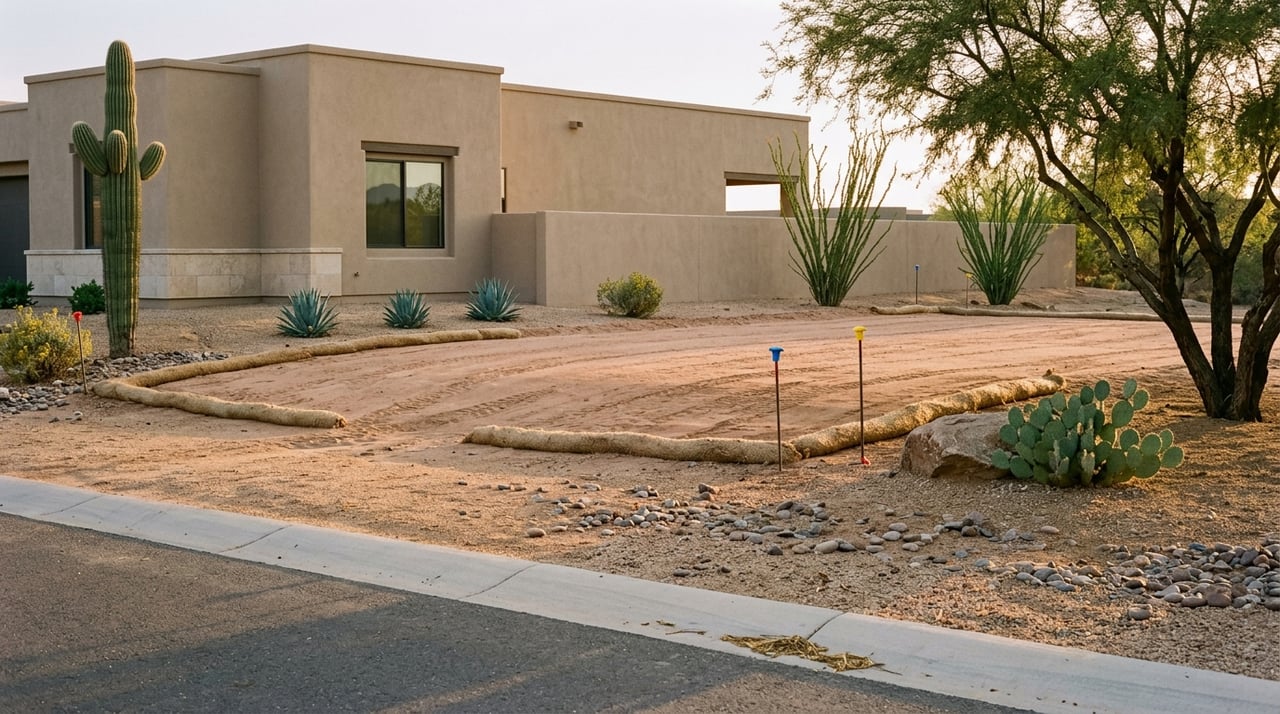
Cave Creek Land and Custom Homes: Key Buying Checks
May 14, 2026
May 14, 2026
Buying a land parcel in Cave Creek can feel exciting right up until the questions start stacking up. Does the lot actually sit inside Cave Creek, can you build what you want, and are water, sewer, septic, access, or hillside rules going to change the plan? If you are considering land or a custom home site here, a little upfront due diligence can save you time, money, and major frustration later. Let’s dive in.
Cave Creek offers a distinct rural-desert setting, but that character comes with more site-specific review than many buyers expect. The town notes that substantial open space, trails, washes, rural roads, and Desert Rural zoning are part of the local landscape, and additional restrictions may apply depending on the parcel.
One of the first local details to understand is that the 85331 ZIP code is not proof that a property is in Cave Creek. According to the town, that ZIP code also includes parcels in Carefree, Phoenix, Scottsdale, and unincorporated Maricopa County. If location matters to your plans, tax expectations, or permitting path, you need to confirm the parcel is physically inside Cave Creek and not just marketed with a Cave Creek mailing address.
Before you think about plans, design, or pricing, confirm exactly what you are buying. That starts with the parcel number, deed, plat map, and any recorded easements or CC&Rs tied to the property.
Cave Creek also notes that private access easements are recorded with Maricopa County rather than kept by the town. If boundaries, access, or subdivision restrictions are unclear, recorded documents and a surveyor can help you verify what exists on paper and what works on the ground.
A listing description can only take you so far. County records can help you identify the legal parcel, subdivision ties, recorded easements, and private restrictions that may affect how the site can be used.
This matters even more with older or irregular parcels. Cave Creek says some properties may be treated as nonconforming rather than fully conforming, and the town may ask for town-file evidence or notarized third-party proof.
In Cave Creek, zoning is one of the biggest filters for custom-home land. The residential zones most relevant to custom-home sites include DR-190, DR-89, DR-70, DR-43, R-35, and R-18.
These zones have different minimum lot sizes and widths. Minimum lot areas range from 190,000 square feet in DR-190 down to 18,000 square feet in R-18, with minimum lot widths ranging from 300 feet to 120 feet.
Many buyers focus on acreage first, but zoning review should go beyond raw lot size. In Cave Creek’s DR and R zones, the town also regulates lot coverage and total land disturbance.
That is important because land disturbance totals can include more than the house itself. The code counts items like driveways and septic systems in the disturbance calculation, which can affect site layout earlier than buyers expect.
Cave Creek’s general plan does not change existing zoning, but it does guide land-use and zoning decisions. The town states that future rezonings must conform to the general plan.
For you as a buyer, that means the general plan is part of the buildability review. If you are considering a parcel because you hope to rezone it later, this is not something to treat as an afterthought.
Cave Creek has specific hillside rules, and they begin when the natural undisturbed slope reaches 15 percent. If a parcel includes that type of terrain, the review process and design limitations can shift.
On hillside areas, the town limits structure height to 25 feet and requires Zoning Clearance before a building permit. The town also requires adequate fire flow or a draftable water source for buildings accessed by a hillside driveway.
Hillside building is not only about where the house sits. Cave Creek’s hillside chapter also ties into grading, transportation, and landscaping design guidelines.
The town may require indigenous plant material for revegetation and screening of exposed cut and fill areas. In practical terms, that can affect driveway design, site prep costs, and how much disturbance is feasible on the lot.
Washes are a real and common part of land review in Cave Creek. If a parcel includes a major or minor wash area, the town says a 100-year floodplain and erosion setback analysis may be required when no current study exists.
Development must also comply with applicable flood-control requirements while preserving natural wash conditions where possible. This is one reason a lot that looks generous on paper may have a smaller practical building envelope than expected.
If the site is in a mapped floodplain, or if work affects district property or easements, Maricopa County Flood Control may require permits before development. The county states that a Floodplain Use Permit is required before building, grading, filling, fence or wall work, or other site changes within a designated floodplain.
A Right-of-Way Use Permit may also be required before development or access on district-owned property or easements. For land buyers, this is another reason to check flood and drainage issues early, not after plans are underway.
Access is one of the most important buildability checks in Cave Creek. The zoning ordinance states that no zoning clearance or building permit may be issued unless the lot has permanent legal and physical access to a dedicated Town right-of-way at least 20 feet wide and adjoining the parcel for at least 20 feet.
This is more than a convenience issue. If access is incomplete, disputed, or dependent on documents that do not support permitting, your timeline and development options can change quickly.
Cave Creek notes that many properties rely on private roads. That means you will want to confirm not only whether access exists, but also who maintains the road, whether the easement is properly recorded, and whether a surveyor should verify the route and boundaries.
The town also notes that BLM patent-reservation access may require dedication before a permit, and the town may require right-of-way dedication before a building permit. For custom-home buyers, this is one of the clearest examples of why land due diligence needs to happen before you invest in plans.
Utility service in Cave Creek is mixed by area, so it is smart to verify each service individually. The town manages drinking water for most residences and businesses, and it also manages the town sewer system and wastewater plant.
However, sewer service is only available in the core portion of town. APS supplies electric service, and Southwest Gas supplies natural gas.
Cave Creek’s water system is fed by Colorado River water through the CAP canal, and the town says it is about 95 percent dependent on CAP water with no active wells to supplement supply. The Desert Hills system still depends on a decreasing groundwater supply along with town-supplied interconnect water.
That does not mean every parcel has the same utility path. You should confirm actual availability and connection options for the specific lot before moving ahead.
If a parcel is outside the sewer-served core area, onsite wastewater and well questions become central. Maricopa County handles onsite wastewater permit applications, soils evaluations, design reviews, and final inspections on ADEQ’s behalf.
For wells, the Arizona Department of Water Resources regulates groundwater wells and requires a Notice of Intent to Drill before drilling or modifying a well. Cave Creek’s buyer guidance also points buyers to Maricopa County for septic permits and ADWR for well permits.
Town zoning is only one layer of review. Cave Creek states that it does not enforce CC&Rs or deed restrictions, but private restrictions can be more restrictive than town zoning.
That means a parcel can be zoned in a way that appears workable while an HOA or subdivision document places tighter limits on design, materials, setbacks, or site improvements. Recorded HOA documents, plat maps, deeds, and easements should be reviewed before you assume a homesite fits your vision.
In Cave Creek, zoning compliance alone does not end the review process. The town has adopted hillside, landscaping, wash, site-plan-review, and special-use chapters, along with design and technical guidelines.
So even if a lot is zoned correctly, you may still face limits tied to grading, drainage, landscaping, access, lighting, or site layout. That is why a parcel can be technically attractive but still require a more careful design and approval strategy.
For site-plan-regulated work, Cave Creek says a pre-application conference is required. The town also states that site-plan approval must come before zoning clearance and a building permit for grubbing, grading, construction, or other site development.
Site plans must be sealed by an Arizona registered civil engineer or land surveyor. If you are budgeting a custom build, this sequencing matters because design and entitlement work may begin earlier than expected.
One Cave Creek detail that surprises some buyers is the treatment of saguaros. The town says removal or relocation of a saguaro in all zoning districts requires prior approval and a town permit, along with compliance with state agriculture rules, subject to stated exceptions.
On a custom-home lot, this can influence driveway placement, grading, and clearing decisions. It is another reminder that site prep in Cave Creek is often tied to both engineering and environmental considerations.
Before you close on land or a custom home site in Cave Creek, it helps to move through a simple, structured review:
Buying land is different from buying a completed home. With a custom-home site, the biggest risks usually come from what you cannot see at a quick showing, such as access rights, disturbance limits, floodplain issues, utility gaps, or approval sequencing.
A calm, detail-driven process can help you ask the right questions before you commit earnest money or start design costs. In a market like Cave Creek, that kind of preparation is often the difference between a smooth build path and expensive surprises.
If you are exploring land or custom home sites in Cave Creek and want a practical, no-surprises approach, Sheryl Smay can help you navigate the process with local insight, careful coordination, and trusted resources.
Stay up to date on the latest real estate trends.
I am committed to guiding you every step of the way—whether you're buying a home, selling a property, or securing a mortgage. Whatever your needs, I've got you covered.